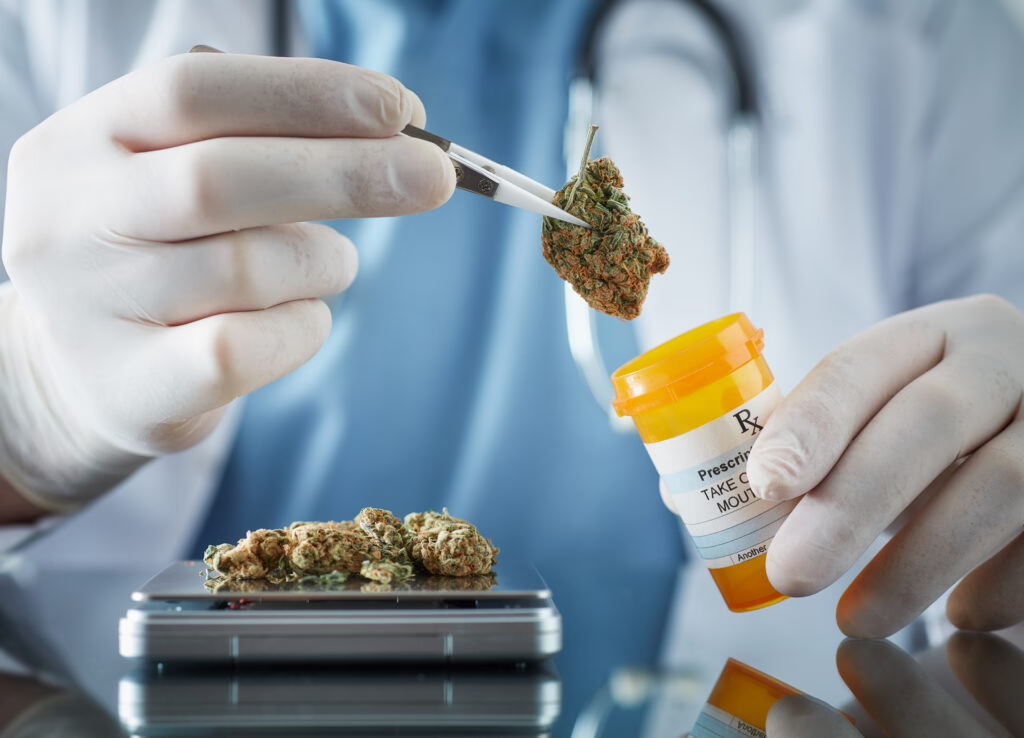
Hemp vs Medical Cannabis in Kentucky
What Patients Need to Know

Hemp vs Medical Cannabis in Kentucky

Kentucky patients, whether in Owensboro, Henderson, Elizabethtown, or beyond, seeking relief through cannabis products often encounter two very different options: hemp-derived items and regulated medical cannabis. While both come from the same plant family, they differ significantly in regulation, safety standards, potency, and legal access. At The Post Dispensary, we believe in transparent education so patients can make informed choices that prioritize health, compliance, and reliability. This page explains the current landscape as of 2026, including recent federal changes that are reshaping the hemp market.

What is Hemp?

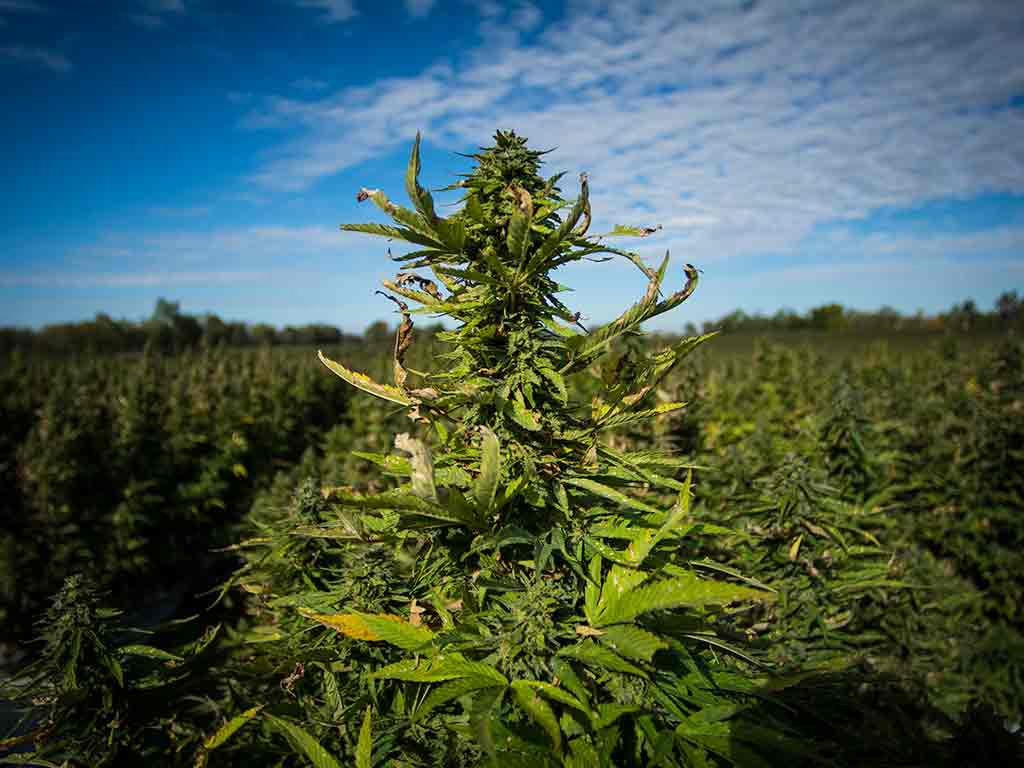
Hemp refers to cannabis plants and their derivatives that historically met the federal definition of containing no more than 0.3% delta-9 THC by dry weight. Under the 2018 Farm Bill, this allowed a wide range of hemp-derived products—such as CBD oils, gummies, vapes, and even THCA flower—to reach store shelves with minimal oversight.
 
In practice, many retailers marketed these items as “non-intoxicating” or “legal hemp.” However, compounds like THCA (which converts to delta-9 THC when heated or burned) and synthetically altered cannabinoids such as delta-8 often delivered psychoactive effects. Kentucky state rules added some guardrails: raw hemp flower cannot be sold directly to the public, and certain hemp-derived cannabinoid products (including beverages) face serving-size limits and age restrictions (21+). Still, the market has included products that many patients found unpredictable in strength and effects.
Hemp vs Medical Cannabis in Kentucky
Medical cannabis in Kentucky

What is Medical Cannabis?

Medical cannabis is the regulated program established under Kentucky law for qualified patients with a valid medical cannabis card. All products must be grown, processed, tested, and sold entirely within the state by licensed cultivators, processors, and dispensaries. This creates a closed, fully traceable system designed specifically for therapeutic use.
 
Products include flower (for vaporization only), vapes, edibles, tinctures, topicals, and concentrates. Every item undergoes strict safety and potency testing at multiple stages. Patients work with licensed dispensaries like The Post to access consistent, lab-verified medicine tailored to their certified conditions.

Key Differences Between Hemp and Medical Cannabis


AspectHemp-Derived ProductsMedical Cannabis (Kentucky Program)
Legal AccessAvailable to adults 21+ without a cardRequires valid Kentucky medical cannabis card
RegulationLimited state and federal oversight with many loopholesFull state licensing, tracking, and compliance
Testing StandardsPre-harvest testingMulti-stage, post-harvest lab testing for potency, contaminants, and safety
THC ContentHistorically ≤0.3% delta-9 (with loopholes for THCA and other cannabinoids that are intoxicating when heated or burned)Precise, labeled dosing up to program limits
Product SafetyInconsistent and often intoxicating via conversionRigorous contaminant screening and batch verification
TraceabilityOften unclear supply chainSeed-to-sale tracking from licensed Kentucky growers


The Testing Gap: Why Hemp Products Can Be Unreliable

One major concern with hemp has been testing protocols. Samples were sometimes taken well before harvest, when THCA and THC levels appeared low. Once the product is consumed (especially when heated), THCA naturally converts into delta-9 THC, delivering stronger effects than the label suggested. This created a gray area where products labeled “hemp” could still be intoxicating, which is what exactly what many patients and lawmakers wanted to avoid.
 
Medical cannabis eliminates this uncertainty. Kentucky requires comprehensive testing of every harvest and production batch by independent safety compliance facilities. Results cover total cannabinoids, potency, pesticides, heavy metals, microbials, and residual solvents. Patients receive clear, accurate labeling so they know exactly what they are using.

Research Spotlight

Why Many Hemp Products Deliver the Same Intoxicating Effects as Medical Cannabis — But With Far Greater Safety Risks

Scientific research confirms what many Kentucky patients have experienced firsthand: a large share of unregulated hemp-derived products sold in recent years produce intoxicating effects essentially identical to those from medical cannabis once consumed. This occurs because of a well-documented chemical process called decarboxylation.
 
Raw hemp often contains high levels of THCA (tetrahydrocannabinolic acid), a non-intoxicating precursor. When heated — through smoking, vaping, or even baking — THCA rapidly converts into delta-9 THC, the primary psychoactive compound responsible for euphoria, altered perception, and other cannabis-like effects. A peer-reviewed 2016 study in Cannabis and Cannabinoid Research demonstrated near-complete conversion of THCA to Δ9-THC at typical consumption temperatures, with the reaction reaching completion in minutes under heat.
A 2022 follow-up analysis of acidic cannabinoid decarboxylation reinforced these findings, showing that heating reliably transforms THCA into psychoactive THC.
Access the 2022 study here
Because of this conversion, many “legal hemp” products — including THCA flower, delta-8, and other hemp-derived cannabinoids — have delivered potent intoxicating effects despite being marketed as non-psychoactive or low-THC alternatives.


Greater Safety Risks Compared to Kentucky Medical Cannabis

While the effects may mirror medical cannabis, the safety profile does not. Unregulated hemp products operate with minimal oversight, leading to documented problems with potency, labeling, and contaminants.In Kentucky’s medical cannabis program, every product sold at licensed dispensaries like The Post undergoes mandatory multi-stage lab testing for potency, pesticides, heavy metals, microbials, and residual solvents. Seed-to-sale tracking ensures full traceability and compliance. Patients receive consistent, accurately labeled medicine in a regulated environment designed for safety and therapeutic reliability.
 
Unregulated hemp products, by contrast, have relied on loopholes that allowed intoxicating effects without the same protections — a gap that new federal rules are now closing. For Kentucky patients seeking trustworthy relief, regulated medical cannabis remains the cleaner, safer, and more lawful choice.

Recent Legal Changes Closing the Loopholes

In November 2025, federal legislation significantly tightened the definition of hemp. Starting November 12, 2026:
  • Hemp is now defined by total THC (including THCA), not just delta-9 THC.
  • Finished hemp-derived cannabinoid products are limited to just 0.4 milligrams of total THC per container.
  • Synthetic or non-naturally occurring cannabinoids (such as many delta-8 and delta-10 products) are largely excluded.
These changes effectively end the federal loopholes that allowed widespread sale of intoxicating hemp products. Kentucky lawmakers have monitored the situation closely but have not yet passed sweeping new state bans—meaning the federal timeline will drive major shifts in what remains available on store shelves.

Why Medical Cannabis Offers a Safer, Cleaner, and More Reliable Option

For Kentucky patients, regulated medical cannabis stands apart because it was built for safety and consistency from the ground up. Every product meets strict state standards, undergoes multiple lab tests, and comes from licensed in-state operators who follow seed-to-sale tracking. This means fewer surprises, lower risk of contaminants, and precise dosing that supports real therapeutic needs.
 
In contrast, the unregulated or lightly regulated hemp market has often left consumers guessing about strength, purity, and effects. With federal rules now tightening, many former hemp options will soon disappear or change dramatically.
 
At The Post Dispensary, we focus exclusively on compliant medical cannabis. Our team provides clear guidance, answers questions about effects and usage, and helps patients navigate the program with confidence. We believe patients deserve medicine that is tested, labeled accurately, and backed by a regulated system designed to protect public health.

Frequently Asked Questions

Medical cannabis operates under a dedicated state program with licensed businesses, rigorous testing, and patient-specific access. Hemp products fall under lighter agricultural rules and are changing rapidly due to new federal limits.

Kentucky already prohibits the retail sale of raw hemp flower to the public. Upcoming federal rules will further restrict THCA-based products nationwide.

Some low-dose hemp-derived items remain available under current state rules for adults 21+, but the federal changes effective November 2026 will significantly limit or eliminate many of them.

Cardholders may legally purchase medical cannabis. We recommend discussing any additional products with your healthcare provider and sticking to regulated dispensary options for consistency and safety.

Visit ThePostDispensary.com regularly for updates on Kentucky medical cannabis rules, product information, and program news. Our staff is always available at (270) 228-7447 to answer questions.
300 N Main St.
Beaver Dam, Kentucky 42320
info@growball.net
270.228.7447
10AM-6PM EVERY DAY
Links
Online Menu Medical Card Information Education Careers News & Press
  • Medicinal cannabis is for use by cardholders only. Keep out of reach of children.
Join Our Newsletter
Sign up for news, updates, and deals.
The Post Dispensary BBB Business Review
© 2025 All rights reserved by Tree Soft LLC
The Post Dispensary_300 N Main St.

Sign up for exclusive news, updates, and deals!

Privacy(Required)
The Post Dispensary_300 N Main St.
Welcome!
You must be +18 to enter this site