Topicals and Non-Intoxicating Options: Relief Without Feeling High
The Post Dispensary does not currently carry topical products. We are sharing this guide now so patients can understand how topicals work under Kentucky law and be ready when licensed creams, lotions, ointments, and other non-consumable options become available on our shelves.
For many Kentucky medical cannabis patients, the goal is not to feel different. It may be to feel better with less stiffness in the morning, less burning in the feet at night, or less swelling in the hands after a long day. That is where topicals and other non-intoxicating options shine.
At The Post Dispensary in Beaver Dam, we talk with patients every day who want targeted relief without a psychoactive effect. Some have arthritis or neuropathy. Some are new to cannabis and want to start slowly. Some simply need to stay clear-headed for work, driving, or family life. Kentucky’s medical cannabis program makes room for that approach, and one of the most useful details is this: non-consumable topical products do not count toward your supply limit.
What “non-intoxicating” actually means
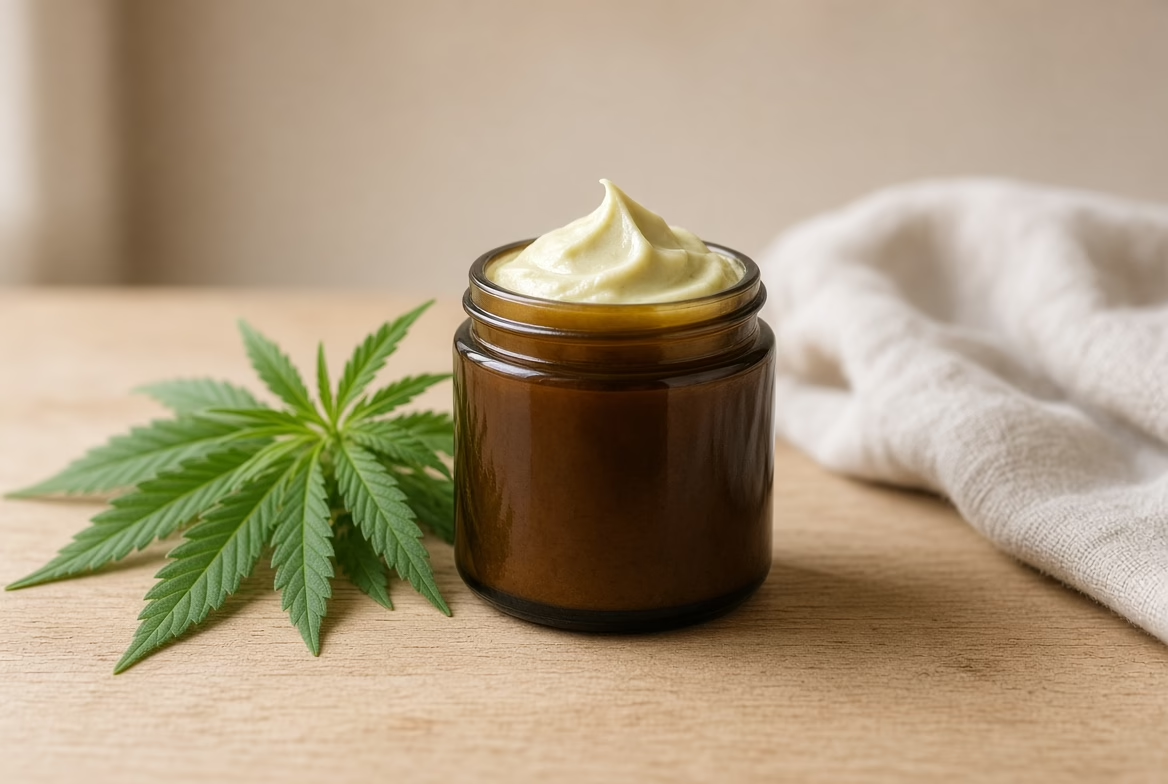
When most people hear “medical cannabis,” they picture edibles, tinctures, or vaporized flower. Those products enter the bloodstream and can produce a noticeable high, especially if they contain THC. Standard topicals work differently. Creams, lotions, ointments, gels, soaps, and similar products are applied to the skin. Cannabinoids such as THC and CBD interact with receptors in the skin, local immune cells, and nearby nerve endings. The skin’s outer barrier generally keeps those compounds from reaching the bloodstream in meaningful amounts, so they do not travel to the brain the way an edible or vape does.
That is why a properly used cream or salve is considered a localized option. You apply it where it hurts. Relief, if it comes, tends to stay in that area.
One important Kentucky distinction: dermal patches are not the same as a cream or lotion. In state rules, patches are grouped with THC-infused products such as edibles, oils, and tinctures. Those do count toward the 3,900-milligram THC supply limit. Gels, creams, lotions, ointments, cosmetics, and soaps do not. If you want relief without feeling high, ask our team whether a product is a standard topical or a transdermal patch designed to move into the bloodstream.
Why this matters for arthritis and neuropathy
Kentucky’s qualifying conditions include chronic or severe pain, and the 2026 expansion clarified that severe arthritis, neuropathies, and fibromyalgia are also covered. Those conditions often show up in specific places: knuckles, knees, shoulders, lower back, feet, and hands.
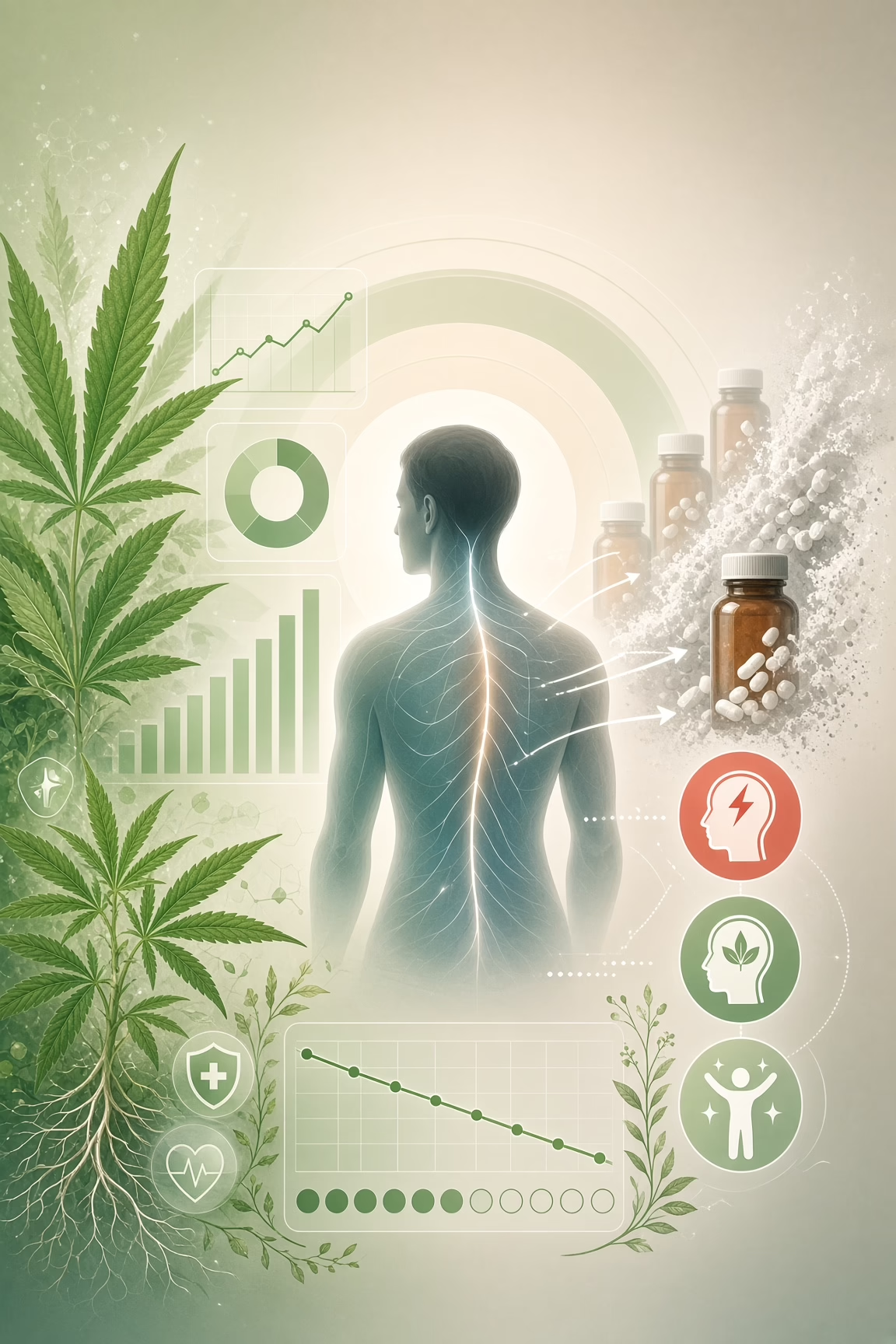
Arthritis pain is frequently driven by inflammation in the joint and surrounding tissue. Neuropathy often feels like burning, tingling, or shooting pain along a nerve path. Topicals are a natural fit for both because they are applied directly to the problem area. Research on topical cannabinoids is still developing, but the basic idea is consistent: cannabinoids can interact with CB2 receptors and other local pathways involved in inflammation and pain signaling. CBD is often discussed for its anti-inflammatory potential. THC may also play a role at the tissue level even when it does not produce a high. Some patients prefer a combination product; others want a CBD-forward option.
Topicals will not treat every kind of pain. Widespread pain, sleep problems, nausea, or anxiety may still call for an ingested or inhaled product. But for a swollen knee, sore hands, or burning feet, a topical can be a practical first step — or a useful add-on to another form of medicine.
Kentucky’s supply-limit advantage
Kentucky patients can purchase up to a 30-day supply of flower, concentrates, and THC-infused products, tracked through the state’s system. For residents, that generally means:
That matters more than it sounds. A patient managing daily joint pain may use a cream several times a day. If that cream counted against the monthly THC cap, it would crowd out other products. Because it does not, patients can keep a topical on the nightstand, in a work bag, or in a caregiver’s kit without using up their edible or tincture allotment.
You still need a valid Kentucky medical cannabis card (or visiting-patient credentials) to purchase from a licensed dispensary. The exemption is about quantity, not eligibility.
Other non-intoxicating or lower-impact options
Topicals are the clearest “no high” category, but they are not the only option for patients who want to stay functional.
High-CBD, low-THC products: Some oils and tinctures are formulated to emphasize CBD. They can still produce effects, and they do count toward the infused-product limit, but many patients find them less intoxicating than high-THC edibles.
Very small servings: Kentucky caps most edible servings at 10 milligrams of THC. A patient who wants mild systemic relief can start with a fraction of a serving and wait. That is not the same as a topical, but it is a way to stay in control.
Products used at night only: Some patients use a topical during the day and a low-dose ingested product only at bedtime.
Age and lifestyle considerations: Vape products are limited to cardholders 21 and older. Topicals have no such age restriction under the vaporization rule, which can matter for younger patients with a caregiver. People who prefer not to vaporize or ingest cannabis at all often land on topicals first.
No product is a guarantee against every workplace or legal concern. If drug testing is an issue, talk with your employer and your practitioner. Standard topicals are designed to stay local, but labels, lab results, and individual circumstances still matter.
How to use a topical well
A good topical routine is simple:
More is not always better. A thick coating that sits on the skin may waste product. Consistency usually matters more than quantity.
If you have broken skin, a known allergy, or a complicated medication list, ask your medical cannabis practitioner before you start. Dispensary staff can explain product types and labels. We cannot diagnose or prescribe.
What to look for at The Post Dispensary
Kentucky medical cannabis must be cultivated, processed, tested, and sold through licensed businesses in the commonwealth. That is a safety feature.
Look for:
Once topicals are available, our team can help you compare a cream versus a balm, a CBD-forward option versus a balanced formula, and a true topical versus a dermal patch. If you are treating knuckles, a lighter lotion may spread more easily. If you need something to stay put on a knee or shoulder, a thicker ointment or balm may be a better fit.
Relief that fits real Kentucky life
Medical cannabis in Kentucky was built for patients, not for a party. The law even requires raw plant material to be labeled as not intended for smoking. Topicals fit that same practical spirit: use the plant where it helps, without forcing every patient into the same experience.If you live with arthritis, neuropathy, or another qualifying condition and you want relief without feeling high, a topical is one of the most straightforward places to begin. It does not replace a conversation with your practitioner. It does give you a licensed, lab-tested option that can stay on the surface — and, under Kentucky rules, stay outside your monthly supply cap.
Until then, visit The Post Dispensary at 300 N. Main Street in Beaver Dam with your registry card and photo ID. We can help you choose from the products we have now, explain Kentucky’s rules, and keep you informed as new formats — including topicals — become available.