Why Lab Testing and Kentucky-Grown Products Matter: What to Look for on Labels
At The Post Dispensary in Beaver Dam, Kentucky—the Commonwealth’s first licensed medical cannabis dispensary—we believe informed patients make better choices, whether you’re an existing patient or a prospective patient seeking how to obtain a medical cannabis card. One of the strongest safeguards built into Kentucky’s medical cannabis program is the requirement that every product sold must be grown, processed, and rigorously lab-tested within the state. This system exists for one primary reason: patient safety and product reliability. Understanding why these rules matter and knowing exactly what to look for on a product label helps you feel confident that the medicine you take home is clean, accurately labeled, and consistent from batch to batch. Learn more about testing and Kentucky-grown products in this blog or our education page.
Why Kentucky Requires In-State Cultivation and Processing
Kentucky law mandates that all medical cannabis sold in licensed dispensaries must be cultivated and manufactured inside the state. This mandate creates a closed, tightly regulated supply chain that can be monitored from seed (or clone) to sale. When cannabis is grown outside the state, tracking becomes far more difficult. Different jurisdictions have varying standards for pesticides, fertilizers, and growing practices. By requiring Kentucky-grown products, regulators can enforce uniform rules on every cultivator and processor. Patients benefit from shorter supply chains, fresher product, and the knowledge that the same oversight applies whether the flower was grown in Jessamine County or processed in western Kentucky. Patients visiting The Post Dispensary from Owensboro, Bowling Green, Henderson, Elizabethtown, and beyond can rest assured that all medical cannabis products sold at our dispensary are grown and processed in-state.
Supporting Kentucky-grown also strengthens the local economy. Licensed cultivators and processors create jobs, invest in facilities, and contribute to communities across the Commonwealth, including the western Kentucky region we serve.
The Critical Role of Independent Lab Testing
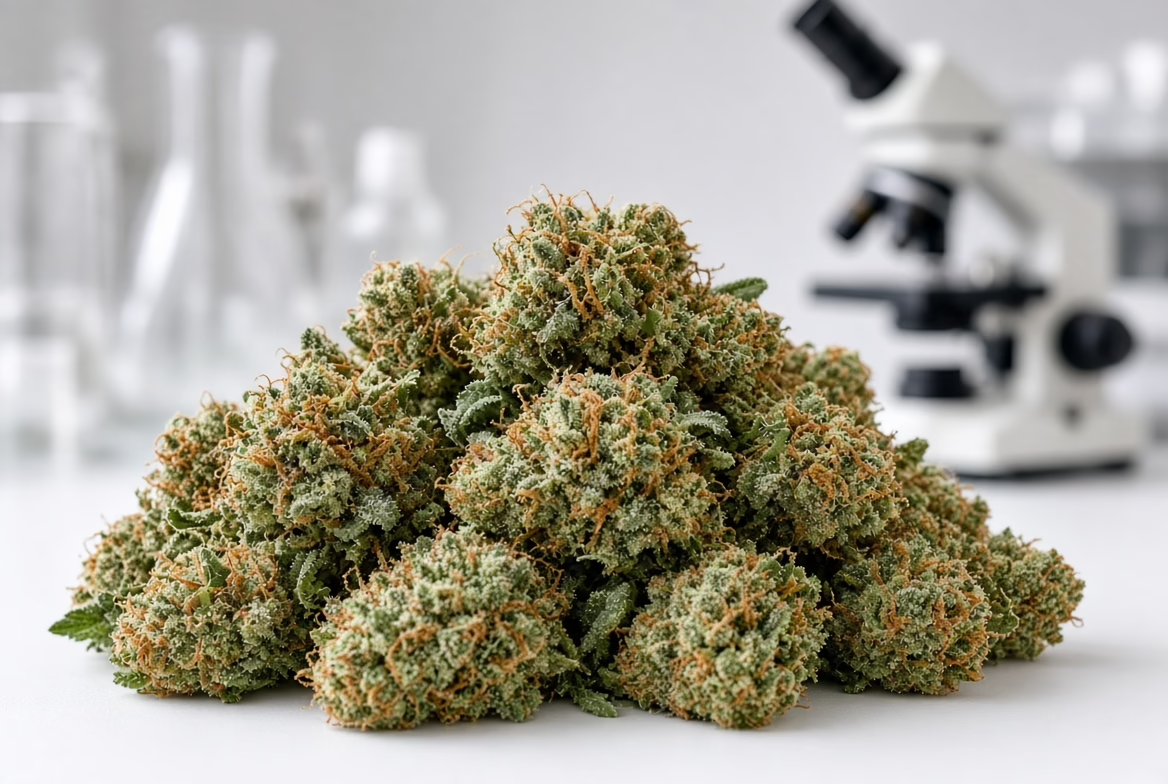
Before any medical cannabis product reaches a dispensary shelf, samples from every harvest batch and production batch must be tested by a state-licensed safety compliance facility (independent testing laboratory). These labs are required to analyze products for a comprehensive list of potential risks and quality markers, including:
Batches that fail critical safety tests for pesticides, heavy metals, mycotoxins, or certain microbes generally must be destroyed. This zero-tolerance approach for the most dangerous contaminants is one of the strongest patient protections in the program. Lab testing also verifies potency. Without accurate numbers, patients cannot dose reliably. A product labeled 20% THC that is actually 12% or 28% can lead to under or over consumption, undermining the medical purpose of the program.
What You Should Look for on Every Label
Kentucky regulations require detailed labeling so patients can make informed decisions. When you examine a product at The Post Dispensary, look for these key elements:
How These Standards Protect Patients
Lab testing and strict labeling work together to reduce risk. Contaminants such as heavy metals or pesticides can cause serious health problems, especially for patients who already have compromised immune systems or chronic conditions. Accurate potency prevents accidental overconsumption. Batch tracking allows rapid response if a problem is ever discovered.
For medical patients, consistency matters as much as purity. When you find a product that works well for your symptoms, reliable labeling and testing make it possible to repurchase the same experience with confidence.
Why This Matters at The Post Dispensary
As Kentucky’s first licensed medical cannabis dispensary, The Post Dispensary takes these requirements seriously. Every product on our shelves has passed the state’s testing standards and carries the required labeling. Our consultants are trained to help patients read labels, understand COAs, and select products that match their certification and preferences. We encourage every patient to take a moment to review the label and, when available, scan the QR code for the full lab report. Knowledge is part of responsible medical cannabis use.
Kentucky’s closed-loop system of in-state cultivation, independent lab testing, and detailed labeling exists to protect the people who need this medicine most. By choosing lab-tested, Kentucky-grown products at The Post Dispensary, you are supporting both your own health and a carefully regulated program designed with patient safety as its foundation.